We're All Rooting for the Wrong Guy: Why Video Game Villains Have Officially Won Our Hearts
Let me paint you a picture. The hero of your game has just given their fifteenth speech about hope, courage, and the power of friendship. They're wholesome. They're brave. Their character arc involves learning to trust again after a mildly traumatic childhood. You respect them. You support them.
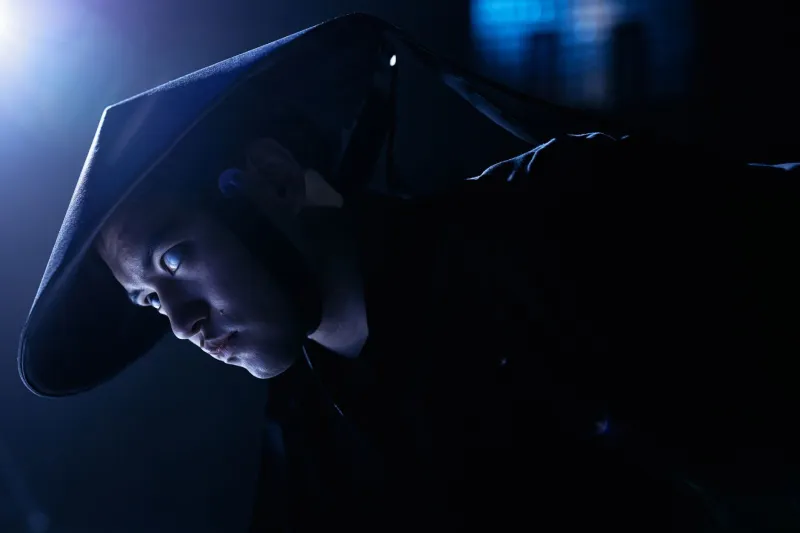
And then the villain walks in.
The villain has a cathedral of a monologue ready to go. Their backstory is a Shakespearean tragedy wrapped in a philosophy lecture. Their outfit is immaculate. They understand something fundamental about the world that the hero refuses to acknowledge, and even though they're objectively doing terrible things, you find yourself nodding along thinking, okay, but they have a point.
This is not a new phenomenon. But gaming, more than any other medium, has turned villain appreciation into a full-blown cultural institution. And as someone who covers gaming through the lens of a joker who's seen too many final boss cutscenes, I'm here to tell you: we are all in our villain era, and the games are enabling us beautifully.
The Protagonist Problem
Here's the uncomfortable truth that game writers have been slowly reckoning with for the past decade: the protagonist is structurally boring.
Not always. Not inevitably. But the hero's journey, as a formula, has a ceiling. The hero must be relatable, aspirational, and ultimately triumphant. Those constraints leave limited room for genuine moral complexity. You can make a hero broody and tortured—gaming has a PhD in broody and tortured—but they still have to end up on the right side of history by the time the credits roll.
The villain has no such obligation. The villain can be right about everything and still lose. They can be charming, brilliant, and philosophically coherent while also being catastrophically wrong in their methods. That contradiction is interesting. That's the stuff that makes players sit with a game long after they've put down the controller.
Hades: When the Villain IS the Game
Supergiant Games did something sneaky with Hades. They made the ostensible antagonist—Hades himself, lord of the underworld—into a character of such dry wit, wounded dignity, and complicated paternal feeling that players spent the entire game simultaneously trying to escape him and kind of hoping he'd say something cutting and hilarious at every attempt.
Hades isn't a villain in the traditional sense, but the game's willingness to present him as a fully realized person with legitimate grievances rather than a mustache-twirling obstacle is exactly what we're talking about. He's not wrong about everything. He's not even wrong about most things. He's just... bad at communicating. Like a lot of us, honestly.
The genius of Hades is that by the end, you don't want to defeat him. You want to understand him. And that emotional complexity is what separates great villain writing from lazy antagonist design.
Baldur's Gate 3: Giving Evil Options That Actually Feel Tempting
Larian Studios made a bold creative choice with Baldur's Gate 3: they wrote the evil path so well that players genuinely agonized over it. Not because being evil is easy, but because the game's antagonists—and the option to join them—were presented with enough internal logic that choosing darkness didn't feel cartoonish.
The Emperor. Raphael. Even the Absolute's various avatars. These aren't evil because the plot needs them to be. They're evil because they made specific choices in response to specific circumstances, and the game respects the player enough to show that chain of causality. Raphael, in particular, is so delightfully theatrical in his villainy that his showstopping musical number in Act Three became one of the most talked-about gaming moments of 2023.
A devil who sings about collecting your soul while wearing a fabulous suit. Tell me you're not at least a little charmed. Tell me with a straight face.
The Witcher 3's Villains: Tragedy in a Trench Coat
The Witcher 3 understood something crucial: the most effective villains are the ones where you can trace exactly how they got there. Gaunter O'Dimm is terrifying because he's patient and precise. The Crones are disturbing because they represent a natural order that predates human morality. And the Wild Hunt is compelling because their motivation, stripped of its horror, is essentially just parenthood.
Geralt himself occupies the morally gray space that makes The Witcher universe tick, but the antagonists around him are what give that grayness texture. In a world where everyone is compromised, the villains aren't aberrations—they're logical conclusions.
Why We Relate to the Bad Guy (An Honest Assessment)
Okay, therapy corner for a second. Why do we actually connect with villains more than heroes in so many games?
Part of it is aspiration, weirdly. Heroes are supposed to be better than us—more selfless, more courageous, more patient. Villains are often just... us, with more resources and fewer social filters. They're tired. They're angry about something that genuinely wronged them. They decided that the system was broken and instead of writing a strongly worded letter, they decided to burn it down. We don't endorse the burning. But we understand the impulse.
There's also the freedom factor. Heroes are constrained by narrative morality. Villains get to say the quiet part loud, do the dramatic thing, and wear the better costume while doing it. In a medium where player agency is the whole point, the villain often represents a kind of radical freedom that the hero's arc explicitly denies.
And frankly? Villains are often just better written. When a development team wants to make a villain compelling, they pour resources into that character's motivation, design, and voice acting. Meanwhile, the hero gets a tragic backstory and a destiny. The villain gets nuance.
The Games That Get It Right (And What They're Doing)
The pattern among games that nail villain writing is consistent: they give the antagonist a coherent worldview. Not a correct one, necessarily, but a coherent one. They make the villain's pain legible. They give them at least one moment of genuine humanity. And they resist the urge to make them evil for evil's sake.
Games that fail at this give us villains who want to destroy the world because... they want to destroy the world. No texture, no tragedy, no moment where you think I see how you got here. These are the villains we forget the moment the credits roll.
The villains we remember? They're the ones that made us uncomfortable because we understood them a little too well.
The Joker's Verdict
At King Joker, we're not here to tell you to root for the bad guy. We're here to tell you that the bad guy is often more interesting, more complex, and more honest about the world than the person saving it—and that gaming, at its best, has learned to use that tension brilliantly.
So next time you're deep in an RPG and you find yourself pausing to really listen to the villain's monologue, don't feel bad about it. Feel curious. Ask why the writers made that choice. Ask what it says about the story, the world, and maybe yourself.
And then save the world anyway. The hero still has a job to do.
But the villain had the better speech. We can all admit that.