Congratulations, Sucker: You Were the Tutorial All Along
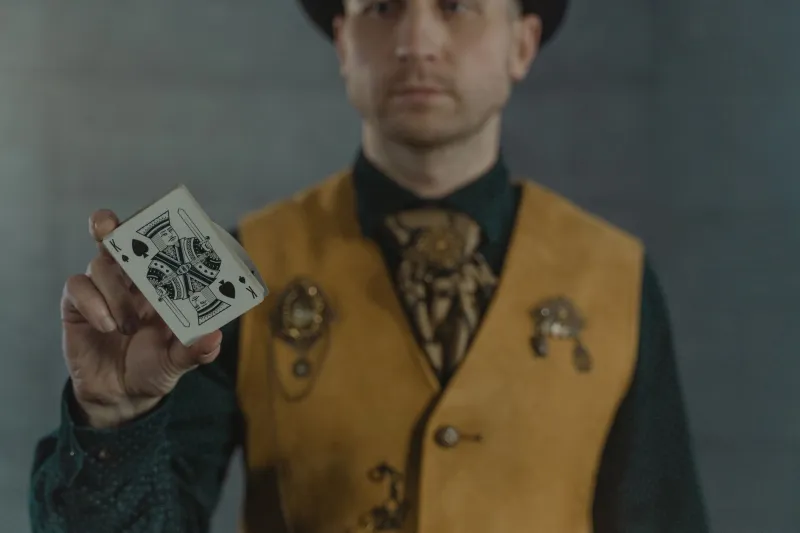
There's a classic bit in comedy where the straight man doesn't realize he's the punchline until the very last second. The audience is in on the joke. Everyone's laughing. And the poor guy just stands there, blinking, slowly piecing it together. If you've spent any serious time gaming, you already know this feeling — you just didn't know it had a name.
Welcome to the Dealer's Gambit, King Joker's affectionate term for games that teach you everything you need to know by convincing you that you already know it. These titles don't flash a "TUTORIAL" banner in the corner of your screen. They don't pause to explain mechanics with a condescending hand-holding prompt. Instead, they let you strut confidently into the casino of their world, sit down at the table, and only reveal the house rules once you've already bet everything.
The joke, as always, is spectacular.
The Classic Con: Confidence Before Competence
Let's start with the granddaddy of narrative misdirection in gaming: Undertale. Toby Fox's indie masterpiece doesn't just teach you how to play — it teaches you why you're playing, and then quietly implies that your reasons were wrong the whole time. Your first few hours feel like a gentle, quirky RPG tutorial. Fight or spare enemies. Learn the patterns. Get cozy.
And then the game starts watching you back.
By the time most players realize that their completionist instincts, their muscle memory for grinding, their very habits as a gamer were the actual lesson being taught, it's already too late. You weren't learning the game. The game was learning you — and building an argument against you.
That's not just clever design. That's a magician sawing you in half and handing you the saw first.
AAA Studios Playing the Long Con
It's not just the indie scene pulling these stunts. Big-budget developers have been in on this gag for years, and some of them execute it with the kind of audacity that deserves a standing ovation (and maybe a formal apology).
Take Spec Ops: The Line. On the surface, it markets itself as a perfectly serviceable military shooter. The mechanics feel familiar, even comfortable. You've done this before. Third-person cover, squad commands, desert setting — you know the drill. So you drill.
The game banks on that comfort. It needs you to feel like an expert before it can make you feel like a monster. Every tutorial instinct you've ever developed — shoot the bad guys, push forward, complete the mission — gets weaponized against you. By the time the famous white phosphorus scene lands, the horror isn't just narrative. It's mechanical. You did it because the game trained you to do exactly that.
You were the tutorial NPC for a lesson about yourself. Dark? Absolutely. Brilliant? Undeniably.
The Sneakier Stuff: When the Joke Is Purely Mechanical
Not every Dealer's Gambit needs to go full existential crisis on you. Some games pull the rug out in ways that are more "whoopee cushion" than "philosophical gut-punch," and honestly, those deserve equal appreciation.
Getting Over It with Bennett Foddy is essentially one long tutorial disguised as a game, where the lesson being taught is patience — and the method of instruction is relentless, gleeful cruelty. Every time you fall back to the beginning, Foddy's calm voiceover is there to philosophize at you. You're not failing the game. The game is using your failure as the curriculum.
Similarly, Outer Wilds — one of the most quietly genius games of the last decade — wraps its entire tutorial inside a mystery. You can't look up how to play because the act of figuring it out is the game. Players who rush to a wiki get spoiled not just on plot, but on the actual experience of learning. The designers knew this. They counted on it. The tutorial is the story, and the story is the tutorial, and by the time you're crying at a campfire in space, you realize you've been had in the most beautiful way possible.
Why This Works (And Why It's Hilarious)
Here's the psychology at play, and it's genuinely funny once you see it: gamers are, as a species, deeply confident. We've logged thousands of hours. We know genres. We recognize patterns. We are, in our own estimation, pretty good at this.
Smart developers know this about us. They know that a player who feels experienced will skip tutorials, skim prompts, and lean on their established instincts. So some of them — the really cheeky ones — design games that are specifically engineered to exploit that confidence.
They hand you a tutorial that doesn't look like a tutorial. They let you feel like the veteran. They give you just enough familiarity to make you comfortable.
And then they deal the hand you didn't see coming.
It's the oldest card trick in the book, repurposed for interactive entertainment: get the mark to think they're smarter than the game, and then reveal that the game was always two steps ahead.
The Respect Hidden in the Prank
Here's the thing about the Dealer's Gambit that separates it from plain old bad game design: it only works on engaged players. A game that tricks you through narrative misdirection or mechanical recontextualization isn't insulting your intelligence — it's betting on it.
You have to be paying attention to get got. You have to care enough to form assumptions before those assumptions can be flipped. The joke doesn't land on someone who isn't invested. In a weird, roundabout way, these games are the most respectful tutorials in existence — they just express that respect by absolutely dunking on you.
It's the gaming equivalent of a comedian roasting someone in the front row. You only pick on the people you think can take it.
So Next Time You Feel Smart...
Next time a game feels almost too familiar, too comfortable, too easy to navigate — pump the brakes. Look around. Check whether the NPCs are a little too helpful, whether the mechanics are a little too on-the-nose, whether the whole setup feels a little too much like someone is setting you up.
Because somewhere out there, a developer is sitting at a table, shuffling a deck, grinning.
And you just sat down across from them.
Welcome to the table, sucker. Try to enjoy the lesson.